

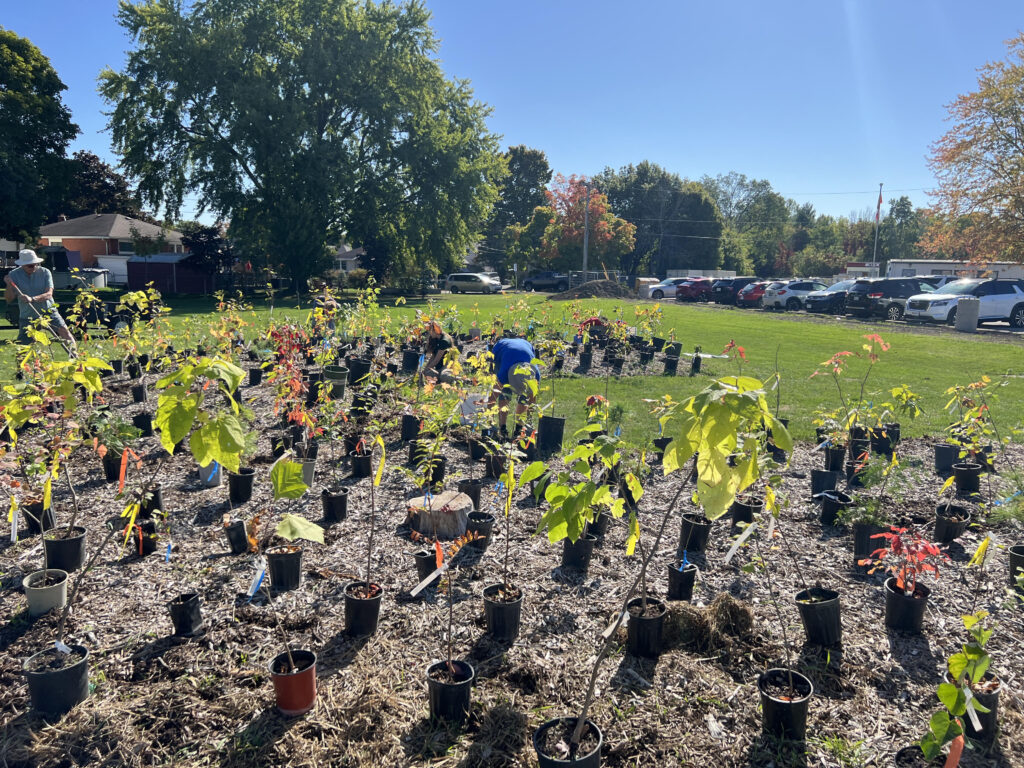
Little Forests / Pocket Forests
Create a small, layered native forest in a yard, community space, or other suitable planting area.
What Are Little Forests?
Little forests, also known as Miyawaki forests, mini forests, micro forests, small forests, or pocket forests, are densely planted, multi-layered small-scale forests designed to replicate natural ecosystems. They grow rapidly, become exceptionally dense, and can rival or even surpass conventional forests in biodiversity.
These little forest projects rely on the use of native species that are adapted to the region and provide critical habitats for local wildlife. They are part of the natural ecology of the region.
These projects can vary greatly in size, starting as small as desired. Typically, a project like this involves planting two to four species per square metre and includes a mix of species from each forest layer—canopy trees, understory trees, and shrubs—as well as a mix of fast-growing, shorter-lived trees and slow-growing, longer-lived trees.
Why Little Forests?
- Support Ontario’s native biodiversity.
- Enhance air quality and carbon sequestration.
- Improve soil quality and water retention.
- Create green spaces in urban and suburban areas.
- Work towards reconnecting forests on a fragmented landscape.
- Foster resilience against climate change.
- Build community and strengthen connections to nature by bringing natural, diverse spaces into urban areas.
How Much Space Do You Need?
Little forests can be as small or as big as you would like. Consider these little forest projects for private yards as well as underutilized areas of municipal parks and public lands. Work with the landowner, such as the municipality, for public land plantings.
Larger spaces allow for greater biodiversity, but even small plots can have significant ecological benefits when planting for all forest layers.
Choose a size based on available land and resources, ensuring space for all forest layers: canopy, understory, shrub, and ground cover. We suggest you aim for at least 4 × 4 metres but ideally 10 m × 10 m (and not necessarily square). Consider including a pathway through your small forest project.
Four Steps to Creating a Little Forest
Site Preparation
- Choose a location with access to sunlight.
- Identify and remove invasive plants, if present. These can compromise your little forest project and increase the amount of maintenance in coming years.
- Prepare and amend the soil in the fall before your planting or in the spring before a fall planting project.
- Consider laying cardboard on top of the grass to suppress it, then add a layer of compost and soil. Add mulch on top to suppress the germination of weed seeds in your soil.
- You can choose to skip the cardboard; just aim for a thicker layer of soil. The idea is to suppress the competing grass.
- You can also remove the grass and enrich the soil.
Species Selection
- Choose a diverse selection of species for each of the forest layers.
- Two to four plants can be planted per square metre.
- Select a healthy variety of canopy species, understory species, and shrub species for the most successful and diverse planting that will best mimic natural forest ecosystems. Aim for fast-growing, shorter-lived trees, as well as slower-growing, longer-lived trees.
- Also consider adding groundcovers to fill the space between the plantings. This might be something to add in the following years.
- Shade-tolerant wildflowers and ferns can be added as the trees and shrubs grow in and shade the site. Think trilliums, bloodroot, wild geraniums, and more.
Planting
- Plant densely with a mix of species across different layers.
- Be careful not to plant too many canopy trees too close together. Space them away from each other to give them room to fill in. Your understory species will thrive beneath their canopy.
- Ensure seedlings are mulched and watered adequately.
- Don't stress too much over their exact placement. Not all may survive, and that is okay. In time, wildlife will bring in seeds from other native species that will germinate and begin to fill and diversify your little forest even more.
- Remember that woody material, branches, leaves, and logs make up a natural forest floor. Leave this material on site. In the early years of your project, you may even want to bring some in.
Maintenance
- Water regularly for the first 2–3 years.
- Control weeds for the first few years as the plants get established and begin to fill in the space.
- Consider adding groundcovers and then eventually woodland plants as your trees and shrubs grow in and shade the site.
- Consider planting herbaceous plants to help fill the space between the trees and shrubs, like wild strawberry, sedges, native grasses, and wildflowers, especially along the edges.
- Show it off!
- Brag to your neighbours!
- Help to change the face of what an urban yard looks like!
Suggested Native Species
Site conditions: Sunny to part-sun locations with well-draining soils. Match each species to the actual light, soil and moisture conditions of your site.
Canopy / Tall Tree Layer
Canopy trees create the upper forest layer and long-term structure.
| Native plant | Growth and site notes |
|---|---|
| American BasswoodTilia americana | Moderate growth; 20–30 m high; high shade tolerance; thrives in deep, moist, well-drained sandy loams, loams, or silt loams; moderate to moist soils. Adaptable to a variety of sites. |
| American SycamorePlatanus occidentalis | Fast growth and large tree reaching 25–35 m tall; low shade tolerance; prefers deep, rich, moist soils but is adaptable and tolerates clay. |
| Bur OakQuercus macrocarpa | Slow growth; 20–30 m tall; moderate shade tolerance; adaptable to sandy, loamy, clayey, and rocky soils, often in limestone soils; dry to moderate moisture. |
| Chinquapin OakQuercus muehlenbergii | Moderate growth; 15–20 m; low to moderate shade tolerance. |
| Eastern CottonwoodPopulus deltoides | Very fast growth; up to 30 m high; low shade tolerance; thrives in sandy or silty soils; tolerant of moderate to moist and wet soils. Can tolerate a variety of sites. |
| Eastern White CedarThuja occidentalis | Slow to moderate growth; 12–15 m tall; high shade tolerance; prefers moist, well-drained calcareous soils and wetlands; moderate to moist moisture but can tolerate drier sites. |
| Eastern White PinePinus strobus | Moderate growth; up to 30 m tall; moderate to high shade tolerance; grows best in well-drained sandy or loamy soils; dry to moderate moisture. Tolerant tree. |
| HackberryCeltis occidentalis | 12–18 m; fast growth; moderate shade tolerance. |
| Red PinePinus resinosa | Moderate growth; up to 25–30 m tall; low shade tolerance; prefers well-drained sandy, acidic soils; dry to moderate moisture. |
| Tulip TreeLiriodendron tulipifera | Fast growth, large tree; 30 m tall; moderate shade tolerance; thrives in deep, rich, well-drained loamy soils; prefers some moisture. |
| White BirchBetula papyrifera | Moderate to fast growth; up to 25 m tall; low shade tolerance; prefers well-drained sandy or silty soils, often nutrient-poor; moderate to moist moisture. |
| White OakQuercus alba | Slow growth; 20–30 m tall; moderate to high shade tolerance; adaptable to deep, well-drained loamy, clay, and rocky soils; dry to moderate moisture. |
| Balsam FirAbies balsamea | Slow growth; 15–20 m tall; high shade tolerance; thrives in cool, moist, well-drained acidic sandy loams; moderate to moist moisture. |
| Bitternut HickoryCarya cordiformis | Moderate growth; up to 35 m; moderate shade tolerance; prefers moist, fertile, well-drained loamy soils; moderate to moist moisture. |
| Black CherryPrunus serotina | Moderate to fast growth; 15–24 m tall; low to moderate shade tolerance; adaptable to deep, fertile, well-drained loamy, sandy, and rocky soils; dry to moderate moisture. |
| Kentucky Coffee TreeGymnocladus dioicus | Moderate growth; 18–25 m tall; low shade tolerance; thrives in deep, rich, well-drained loamy or limestone soils; dry to moderate moisture. |
| Red MapleAcer rubrum | Moderate growth; up to 25 m; moderate to high shade tolerance; prefers loamy or silty soils but can tolerate some clay sites, though it does prefer slightly acidic sites; moist to wet moisture, but can tolerate some moderately dry sites once established. |
| Red OakQuercus rubra | Moderate growth; up to 30 m; moderate shade tolerance; adaptable to loamy, clay, and rocky soils; moderate to moist moisture. |
| Shagbark HickoryCarya ovata | Moderate growth; 15–25 m tall; moderate to high shade tolerance; grows well in loamy, clay, and rocky soils; dry to moderate moisture. |
| Sugar MapleAcer saccharum | Moderate growth; 25 m tall; very high shade tolerance; thrives in loamy, rich soils but can tolerate some clay and silty soils; moderate to moist moisture but not waterlogged. |
Understory Trees / Sub-canopy Layer (Includes Large Shrubs)
Smaller trees and large shrubs create a middle layer below the canopy.
| Native plant | Growth and site notes |
|---|---|
| American HazelnutCorylus americana | 3–5 m; fast growth; low to moderate shade tolerance. |
| American Mountain AshSorbus americana | 6–12 m; moderate growth; low to moderate shade tolerance. |
| American PlumPrunus americana | 3–8 m; fast growth; low shade tolerance. |
| Blue Beech / MusclewoodCarpinus caroliniana | 6–10 m; slow growth; high shade tolerance. |
| Canada PlumPrunus nigra | 3–8 m; fast growth; low shade tolerance. |
| ChokecherryPrunus virginiana | 3–8 m; fast growth; low to moderate shade tolerance. |
| Eastern RedbudCercis canadensis | 6–9 m; moderate growth; moderate shade tolerance. |
| Highbush CranberryViburnum trilobum | 2–4 m; moderate growth; high shade tolerance. |
| Flowering DogwoodCornus florida | 6–9 m; moderate growth; high shade tolerance. |
| HawthornCrataegus spp. | 5–10 m; slow to moderate growth; low to moderate shade tolerance. |
| Hop HornbeamOstrya virginiana | 7–12 m; slow growth; high shade tolerance. |
| NannyberryViburnum lentago | 3–6 m; moderate growth; high shade tolerance. |
| Pagoda DogwoodCornus alternifolia | 4–8 m; moderate growth; high shade tolerance. |
| PawpawAsimina triloba | up to 10 m; slow to moderate growth; high shade tolerance. |
| Pin CherryPrunus pensylvanica | 6–15 m; fast growth; low shade tolerance. |
| ServiceberryAmelanchier spp. | 4–10 m; moderate growth; moderate shade tolerance. |
| Witch HazelHamamelis virginiana | 3–6 m; slow to moderate growth; high shade tolerance. |
Shrub Layer
Shrubs provide the lower woody layer and help create varied forest structure.
| Native plant | Growth and site notes |
|---|---|
| Beaked HazelnutCorylus cornuta | 2–4 m; moderate growth; shade tolerance. |
| Black ChokeberryAronia melanocarpa | 1–2 m; moderate growth; moderate shade tolerance. |
| Downy ArrowwoodViburnum rafinesquei | 2–3 m; moderate growth; high shade tolerance. |
| Fragrant SumacRhus aromatica | 0.6–2 m; moderate growth; low to moderate shade tolerance. |
| Lowbush HoneysuckleDiervilla lonicera | 0.5–1 m; fast growth; shade tolerance. |
| Maple-leaf ViburnumViburnum acerifolium | 1–2 m; moderate growth; high shade tolerance. |
| MeadowsweetSpiraea alba | 1–1.5 m; moderate to fast growth; low to moderate shade tolerance. |
| NinebarkPhysocarpus opulifolius | 1.5–3 m; moderate to fast growth; moderate shade tolerance. |
| Red-osier DogwoodCornus sericea | 2–3 m; fast growth; moderate shade tolerance. |
| Shrubby St. John’s WortHypericum prolificum | 0.6–1.5 m; moderate growth; low to moderate shade tolerance. |
| Smooth ArrowwoodViburnum dentatum | 2–3 m; moderate growth; high shade tolerance. |
| Smooth Wild RoseRosa blanda | 0.6–1.5 m; moderate growth; moderate shade tolerance. |
| SnowberrySymphoricarpos albus | 1–2 m; moderate growth; high shade tolerance. |
| SpicebushLindera benzoin | 2–4 m; slow to moderate growth; high shade tolerance. |
| WitherodViburnum cassinoides | 1.5–3 m; moderate growth; high shade tolerance. |
| Wild Black CurrantRibes americanum | 1–2 m; moderate growth; moderate to high shade tolerance. |
Mature heights and growing conditions are approximate. Plant choice, preparation and maintenance should be adapted to local soils, climate, available space and project goals.